

Passage 1: The Forgotten Architects of Nature
You should spend about 20 minutes on Questions 1 – 13, which are based on Reading Passage 1 below.
A: In the dense rainforests of Central America, a quiet revolution is underway—not led by humans, but by ants. Leafcutter ants, often dismissed as mere pests, are now recognized as one of nature’s most sophisticated architects. These tiny creatures cultivate fungus gardens underground, using chewed leaves as compost. Their colonies can span hundreds of meters, with complex tunnel systems rivaling human-engineered infrastructure.
B: Scientists have discovered that these ants play a crucial role in maintaining forest health. By pruning vegetation, they stimulate new growth and prevent certain plant species from dominating. Their underground chambers aerate the soil, improving water absorption and nutrient cycling. In essence, leafcutter ants are ecological engineers.
C: Yet, their contributions have long been overlooked. Popular media tends to highlight charismatic megafauna—jaguars, toucans, and monkeys—while ignoring the micro-workers that sustain the ecosystem. This bias has implications for conservation funding, which often prioritizes large animals over foundational species.
D: Recent studies suggest that protecting ant colonies could be as vital as preserving trees. In areas where ant populations have declined due to deforestation or pesticide use, soil quality deteriorates, and plant diversity drops. The ants’ absence disrupts the delicate balance of the rainforest.
E: Conservationists are now advocating for a shift in perspective. Instead of focusing solely on visible wildlife, they propose a “bottom-up” approach—starting with the smallest contributors. Leafcutter ants, with their silent labor and intricate societies, may hold the key to rainforest resilience.
F: The ants’ behavior also offers insights into collective intelligence. Each ant follows simple rules, yet the colony as a whole exhibits complex decision-making. When foraging, scouts identify leaf sources and communicate their findings through pheromone trails. Workers then follow these trails, adjusting their routes based on efficiency and competition.
G: This decentralized system has inspired algorithms in robotics and computer science. Engineers study ant behavior to design swarm robots that can navigate disaster zones or perform coordinated tasks without central control. The ants’ ability to adapt, cooperate, and optimize has applications far beyond the forest floor.
H: Despite their ecological and technological significance, leafcutter ants remain underrepresented in educational materials and conservation campaigns. Few school curricula mention them, and documentaries rarely feature their underground cities. This invisibility perpetuates the idea that only large, visible animals matter.
I: However, some organizations are working to change this narrative. Citizen science projects now invite volunteers to observe ant behavior and report findings. Museums are creating interactive exhibits that showcase ant colonies. These efforts aim to shift public perception and highlight the importance of small species in large ecosystems.
J: In a world facing biodiversity loss and climate instability, understanding and protecting foundational species is more urgent than ever. Leafcutter ants may be tiny, but their impact is immense. They remind us that strength lies not just in size, but in cooperation, resilience, and quiet persistence.
Questions 1–5:
Do the following statements agree with the information given in Reading Passage 1?
For statements 1 – 5, write
True if the statement agrees with the information
False if the statement contradicts the information
Not Given if there is no information on this

Passage 2: The Psychology of Waiting
You should spend about 20 minutes on Questions 14 – 26, which are based on Reading Passage 2 below.

A: Waiting is a universal experience—whether in traffic, at the doctor’s office, or for a webpage to load. Yet, our perception of waiting is shaped more by psychology than by actual time. Studies show that people are more tolerant of waits when they feel engaged or informed. For example, a countdown timer on a website can reduce frustration, even if the wait time remains unchanged.
B: The concept of “occupied time” versus “unoccupied time” is central to this phenomenon. People perceive time as passing faster when they are doing something—even if it’s trivial. This is why elevators often have mirrors: not for vanity, but to distract users and make the wait feel shorter. Similarly, background music in restaurants or visual displays in queues serve the same purpose.
C: Businesses have long exploited this insight. Airlines provide boarding updates, restaurants offer menus while guests wait, and theme parks use interactive displays in queues. These tactics don’t reduce wait times but improve the experience. The goal is to make waiting feel purposeful or entertaining.
D: Another factor influencing patience is fairness. People are more tolerant of delays when they believe the system is just. If someone cuts in line, frustration spikes—not necessarily because of the delay, but due to perceived injustice. Transparency and clear rules help mitigate this. For example, numbered tickets in clinics or digital queue systems in banks reassure customers that their turn will come.
E: Cultural differences also play a role. In some societies, waiting is seen as a sign of respect or patience. In others, it’s viewed as inefficiency or poor service. For instance, in Japan, punctuality is highly valued, and delays are often met with formal apologies. In contrast, in parts of Southern Europe, waiting is more socially accepted and less likely to provoke complaints.
F: Technology has further complicated the psychology of waiting. With smartphones and instant access to information, people have become less tolerant of delays. Expectations for speed have increased, and even short waits can feel unbearable. Ironically, the very tools that offer distraction also raise impatience.
G: However, not all waiting is negative. Anticipation can enhance enjoyment. Waiting for a concert, a holiday, or a special meal can build excitement. Psychologists call this “positive delay,” where the wait itself adds value to the experience. The key difference lies in whether the wait is voluntary and meaningful.
H: Designers and service providers now focus on “wait architecture”—the deliberate shaping of waiting environments. Comfortable seating, ambient lighting, and informative signage can transform a frustrating wait into a tolerable or even pleasant one. Hospitals, for example, are redesigning waiting areas to reduce anxiety and improve patient satisfaction.
I: Ultimately, managing wait times is less about speed and more about perception. By understanding the psychology behind waiting, organizations can design better experiences—and individuals can cultivate patience. Whether through distraction, fairness, or anticipation, the way we wait matters as much as the wait itself.
Questions 14 – 26
Do the following statements agree with the information given in Reading Passage 2?
For statements 14 – 18, write
True if the statement agrees with the information
False if the statement contradicts the information
Not Given if there is no information on this
Passage 3: The Rise of Urban Farming
You should spend about 20 minutes on Questions 27 – 40, which are based on Reading Passage 3 given below.
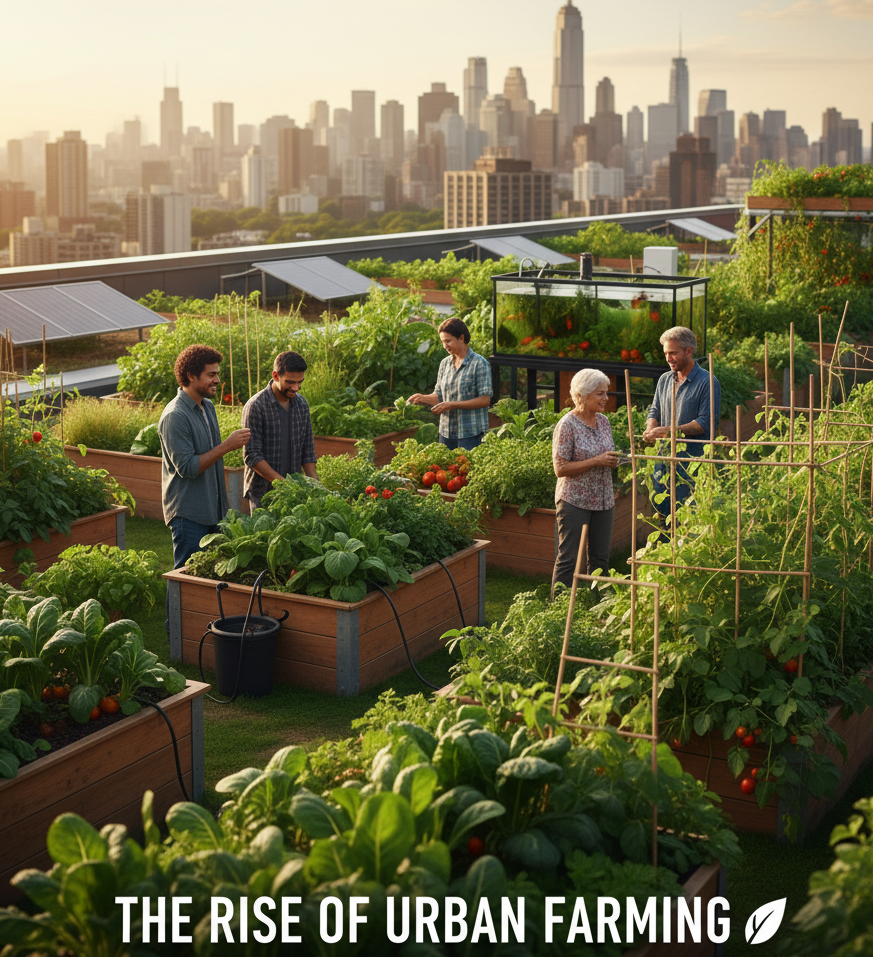
A: As cities expand and populations grow, the pressure on traditional food systems intensifies. Urban farming—once a fringe concept—is now gaining traction as a viable solution to food insecurity, environmental degradation, and the disconnect between people and their food sources. From rooftop gardens to vertical hydroponic towers, urban agriculture is reshaping how cities think about sustainability.
B: One of the most compelling aspects of urban farming is its adaptability. In densely populated areas, where land is scarce, innovative techniques like vertical farming and aquaponics allow for high-yield production in compact spaces. These systems often rely on controlled environments, using LED lighting, nutrient-rich water, and climate regulation to optimize growth. Unlike traditional farms, urban setups can operate year-round, unaffected by seasonal changes.
C: Beyond food production, urban farming offers social and educational benefits. Community gardens foster neighborhood cohesion, providing shared spaces where residents collaborate, learn, and grow together. Schools are increasingly integrating garden projects into their curricula, using them to teach biology, nutrition, and environmental stewardship. These hands-on experiences help students understand the origins of their food and encourage healthier eating habits.
D: Economically, urban farming presents new opportunities. Localized food production reduces transportation costs and emissions, while also creating jobs in farming, logistics, and education. In some cities, restaurants source ingredients directly from rooftop farms, offering ultra-fresh meals and promoting farm-to-table dining. Entrepreneurs are also exploring subscription-based models, delivering weekly produce boxes to urban households.
E: However, urban farming is not without challenges. Initial setup costs can be high, especially for advanced systems requiring technology and infrastructure. Regulatory hurdles, such as zoning laws and building codes, can limit expansion. Moreover, critics argue that urban farms cannot match the scale of rural agriculture and may only serve niche markets.
F: Despite these limitations, the momentum behind urban farming continues to build. Governments are beginning to support initiatives through grants, tax incentives, and policy reforms. Public awareness campaigns highlight the environmental and health benefits of growing food locally. As climate change and global supply chain disruptions become more pressing, urban farming offers a resilient alternative.
G: The future of urban agriculture lies in integration. Architects and city planners are now designing buildings with built-in farming systems—green facades, edible rooftops, and indoor gardens. These structures not only produce food but also improve air quality, reduce heat, and enhance urban aesthetics. In this way, farming becomes a core element of urban design, not just an add-on.
H: Ultimately, urban farming is more than a trend—it’s a paradigm shift. It challenges conventional notions of agriculture, redefines city living, and empowers communities to take control of their food systems. Whether through a school garden or a high-tech vertical farm, the movement reflects a growing desire for sustainability, self-sufficiency, and connection to nature.
Questions 27 – 31
Reading Passage 3 has eight paragraphs, A-H
Choose the correct heading for each paragraph from the list of headings below.
Explore Tricks & Strategies to Attempt All Question Types Here With Exercises