
Scanning for details
The passages in the IELTS Reading paper gradually become more difficult, with Section 1 being the easiest.
1.1 Spend ONE minute skim reading the following passage to get a sense of the overall meaning. What is the main topic?
a. new discoveries in chemistry
b. the discovery of ancient objects
c. how international scientific teams work
Ochre find reveals ancient knowledge of chemistry
The oldest ochre-processing toolkits and workshop ever found have been unearthed, indicating that as far back as 100,000 years ago, humans had an understanding of chemistry.
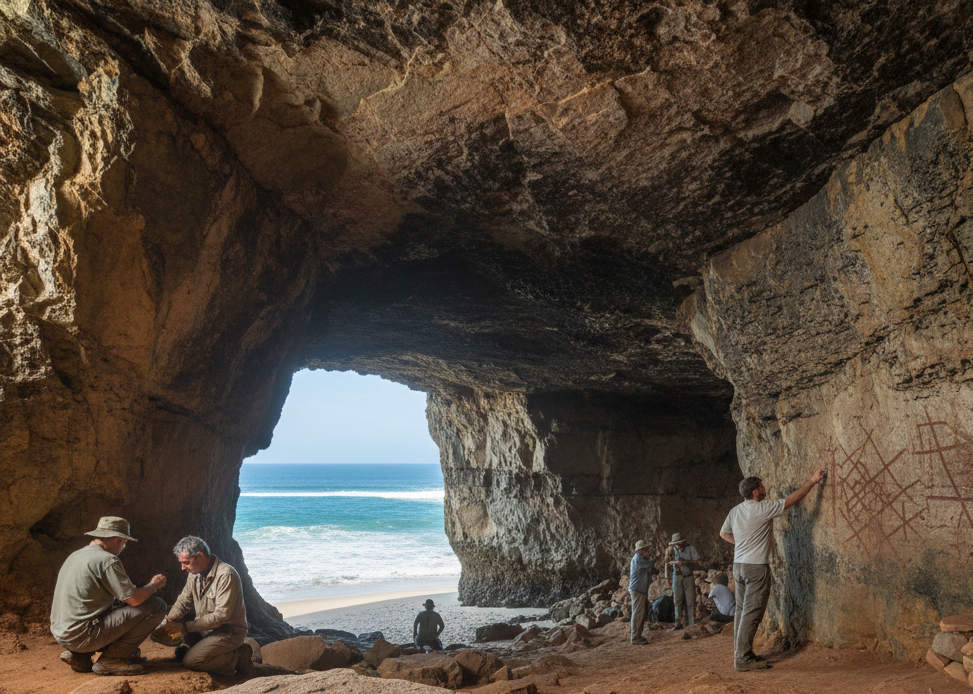
South Africa’s Blombos Cave lies within a limestone cliff on the southern Cap coast, 300 km east of Cape Town. It’s known for its 75,000-year-old rich deposits of artefacts such as beads, bone tools and ochre engravings. Some engravings date as far back as 100,000 years.
Archaeologist Christopher S. Henshilwood from the University of Witwatersrand in Johannesburg and University of Bergen, Norway has been excavating at the site since 1992, and has reported the discovery of a mixutre, rich in ochre, stored in two abalone shells. It dates back to the Middle Stone Age – 100,000 years ago. Ochre is a term used to describe a piece of earth or rock containing red or yellow oxides or hydroxides of iron. It can be used to make pigments, or paints, ranging from golden-yellow and light yellow-brown to a rich red. Its use spans the history of humans – from those living more than 200,000 years ago, to modern indigenous communities.
Made from an array of materials, this mixture, which could have functioned as wall, object and skin decoration or skin protection (acting in a similar way to modern-day sunscreen), indicates the early developments that occurred in the people who originally used the site.
“[Judging from] the complexity of the material that has been collected from different parts of the landscape and brought to the site, they [the people] must have had an elementary knowledge or chemistry to be able to combine these materials to produce this form. It’s not a straightforward process,” said Henshilwood.
Scanning involves searching a text quickly for a specific piece of information. Practice scanning the passage for the words/numbers in the box.
A: 75,000 B: 100,000 C: 200,000 D: artefacts E: ochre
Question Type
-Short Answer Questions
Quick Strategies for IELTS Reading Short Answer Questions
Short Answer questions look simple, but they’re sneaky. A few smart habits make them much easier to handle.
✅ Core Strategies
- Read the instructions first — they tell you exactly how many words you can use. This is non‑negotiable.
- Scan for keywords — names, dates, places, technical terms. These questions follow the order of the passage.
- Paraphrasing is your friend — the passage rarely uses the exact wording of the question.
- Lift answers carefully — you can copy directly from the text, but only the relevant part.
- Keep answers grammatically aligned — your answer must fit the question stem logically.
✍️ The “Number of Words” Rule (and how it traps people)
IELTS gives very specific instructions such as:
- NO MORE THAN THREE WORDS AND/OR A NUMBER
- ONE WORD ONLY
- NO MORE THAN TWO WORDS
These rules apply strictly. Even one extra word makes the answer wrong.
✅ How to avoid silly mistakes
- Count hyphenated words as one (e.g., well-known = 1 word).
- Numbers can be written as digits or words (both count as one).
- Don’t add unnecessary articles (e.g., “the”, “a”).
- Don’t paraphrase if the original wording already fits the limit.
- Double-check your word count before moving on — this alone saves many marks.
🎯 A quick example
If the instruction says NO MORE THAN TWO WORDS, and the text says:
“The museum opened in 1998.”
Question: When did the museum open?
Correct answers:
- 1998
- in 1998 (still two words)
Incorrect answers:
- the year 1998 (three words → automatically wrong)

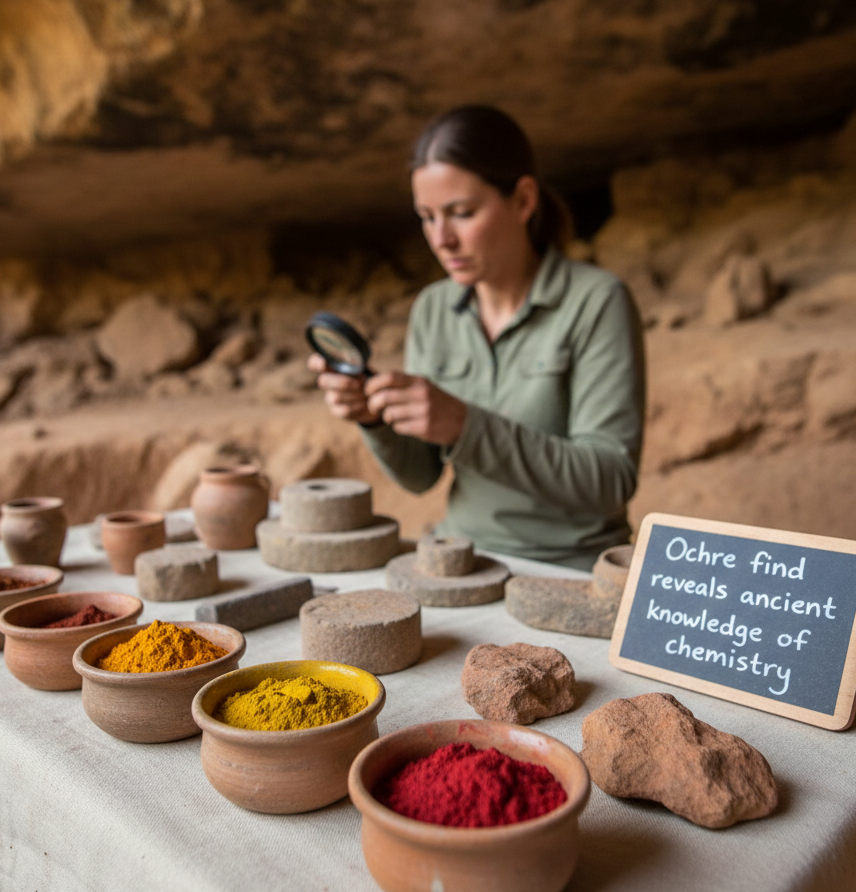
The Blombos Cave discovery is the earliest-known example of a pigment- or paint-producing workshop. All of the materials were discovered at the same site, and they included in array of raw materials including samples of bone and charcoal, as well as pigment-producing equipment such as grindstones and hammerstones. Judging by the equipment, which shows signs of wear, Henshilwood and his team were able to deduce the process used to produce the ochre mixture.
First, the pieces of ochre were rubbed on quartzite slabs and crushed to produce a red powder. This was combined with ground-up mammal bone, the traces of which show signs that it was heated before being ground. The ochre powder and the bone pieces were mixed with charcoal, stone chips, quartz grans and a liquid (perhaps water) and was then transferred to ablone shells to be gently stirred before being ready for application.
Attempt Reading Practice Tests Here