
In this particular question type you are asked to complete a summary of text.
Two Types of summary
Type one
You have to choose the correct answer from the text. It is very unlikely that you have to take the words you use for one answer from different places in the text. The words should be found together and in one sentence.
This type of summary is not really very different from the sentence completion question type. You can think of a type one summary as nothing more than a paragraph made up of a number of sentence completion type questions. The approach to answering these questions is the same.
Type Two
You have to choose the correct words from a preselected list. The words you select might be different from the words in the text but the meaning of the completed sentence will be the same. Other words, often very similiar in meaning or grammatically incorrect, might be added to confuse you.
As answers are usually in order for both types of summary, you can start completing the summary in any part of the text. Therefore, it is a good idea to look for keywords that can easily be seen in the reading passage and answer these parts first.
Summary Type One – Answer from the text
Look at the short paragraph about Siberian tigers and then complete the summary that follows. Remember that after completion the grammar must be correct and the meaning of the summary must be the same as in the text.
The Siberian Tiger
The Siberian tiger can be found in what was the USSR and seems to live mainly on the lower slopes of mountains. It likes to eat wild boar, wapiti and moose and will travel long distances in search of food. The male tiger weighs more than the female and is bigger than any other species of tiger. Genetically, it is closely linked to the now extinct Caspian tiger. Although brown bears are capable of killing tigers, they make up approximately 8% of their diet. Russian conservatives ar trying to protect Siberian tigers because they keep the wolf population under control.

Now look at the article about Avebury and answer the eight questions that follow.
AVEBURY
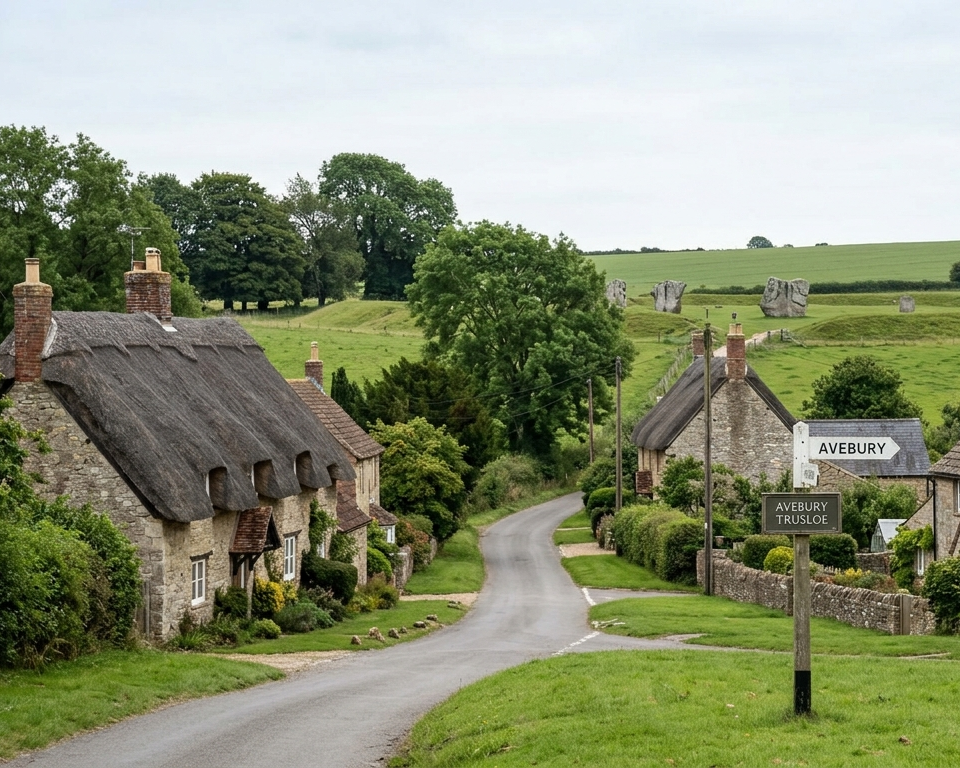
It is only during the Saxon period that any evidence of a village at Avebury began to appear. When the monuments were enjoying their goden age, the beginnnings of the village we now know lay over 3,000 years in the future. The builders of the henge could never have imagined the controversy that the result of their labour was to create amongst the later inhabitants of the area, and the treatment it was to receive, as a result of religious zeal and financial gain. The effect the village was to have on the more recent history of the monuments, adds considerably to the fascination of the Avebury story.
Although a large portion of Avebury village now lies within the henge, throughout the period that the vilalge has existed, the disposition of its buildings has changed. The village of the early Saxon period appears to have lain further to the west, traces of its buildings still being visible today between the present village and the hamlet of Avebury Trusloe. As the village grew, its buildings approached and eventually spread into the interior of the henge itself.
It wasn’t until the last century that the historical value of Avebury came to be fully appreaciated, when Alexander Keiller began to reveal what lay hidden beneath the ground. At this point the history of the village was to change drammatically as the henge, with the help of its owners, was to fight back against the suffering it had endured at the hands of the earlier villagers. The past began to override the future, when it was deemed expedient to remove many of the buildings that now existed within its confines. Most of the displaced inhabitants were to be re-located to Avebury Trusloe.
It is believed that Keiller’s intention was to ultimately remove all modern buildings from within the Henge, but when WW2 intervened, and his work at Avebury came to an end, this dramatic and controversial change was never to be completed. The buildings that remain within the henge now, exist in a juxtaposition with the stones that serve to emphasise the remoteness of the culture that built the monument.
The village itself holds much of interest including the church of St. James which has a long history going back to Saxon times. Within is a rare example of a medieval rood-loft once hidden but rediscovered in 1810. It also contains a notable font believed to be of Saxon origion and later adorned with some interesting carvings during the Norman period.
There is also a fine manor house, alongside which is the Alexander Keiller Museum. This contains detailed information regarding the archaeology of the monuments and has many fascinating artefacts from the area on display. Supplementing the Keiller museum is the Barn Gallery which also contains some interesting ‘hands on’ exhibits and other information supplied by the National Trust under whose care the monuments now fall.
Summary type Two – Answers from the preselected list
Look at the short paragraph about Siberian gigers and the complete the summary that follows by picking words from the box. Remember that after completion the grammar must be correct and the meaning of the summary must be the same as the text.
The Siberian Tiger
The Siberian tiger can be found in what was the USSR and seems to live mainly on the lower slopes of mountains. It likes to eat wild boar, wapiti and moose and will travel long distances in search of food. The male tiger weighs more than the female and is bigger than any other species of tiger. Genetically, it is closely linked to the now extinct Caspian tiger. Although brown bears are capable of killing tigers, they make up approximately 8% of their diet. Russian conservatives ar trying to protect Siberian tigers because they keep the wolf population under control.
Now look at the article about Roman remains and answer the seven questions that follow.
Roman Remains
During 2004, 5 York Archaeological Trust excavated 80 burials in York, in advance of housing developments. The site was part of a large cemetery on the outskirts of the Roman town, across the river from the legionary fortress.
The burials are dated to between the early 2nd century to the late 3rd century, and probably cover most of the period of Roman occupation in northern England (about AD70-410). Almost all are male, and the vast majority are adults – not the usual demographics for Roman cemetery.
However, despite the evidence for a harsh lifestyle and a violent death, these people had been carefully buried. There was also evidence that funerary feasting had taken place at the cemetery; this often occurred on the anniversary of the death of loved ones.
Were these people gladiators, who were both revered (as superstars) and reviled (as associated with death)? Or were they people who had been executed but given a decent burial? How about soldiers who had died in battle? Or was this evidence of a group of people who had unusual views on religion or burial practices?
As Kurt Hunter Mann, who is leading the research at York Archaeological Trust explains, there is evidence to support other theories, too: “There are numerous pieces of evidence that point towards or are consistent with the interpretation that the skeletons are Roman gladiators, but there is also other evidence that suggest the individuals could have been soldiers, criminals, or members of a religious cult,” he says.
One of the most significant pieces of evidence supporting the ‘gladiator’ conclusion is a large carnivore bite mark – probably inflicted by a lion, tiger or bear, which archaeologists believe may have been sustained in an arena contest.
Other evidence includes a high incidence of substantial arm asymmetry – a feature mentioned in ancient Roman literature in connection with a gladiator; some healed and unhealed weapon injuries; possible hammer blows to the head (a feature attested as a probable gladiatorial coup de grace at another gladiator cemetery at Ephesus in Turkey).